July 14, 2026
A panoramic view of the Buck Institute campus, set against the hills of Marin County, California.
The Buck Institute for Research on Aging is the first independent biomedical research institute in the world focused solely on understanding aging and age-related disease. Based in Novato, California, the Buck Institute brings together interdisciplinary teams of scientists, clinicians, and trainees united by a single mission: to end the threat of age-related disease for this and future generations. Since 1999, when research on aging was still considered by many in the scientific community to be a fringe pursuit, the Buck has helped build and legitimize the field now known as geroscience.
The Buck Institute has made landmark discoveries since its inception. For example, in 2000, scientists at the Buck Institute discovered that a chemical compound could extend lifespan in animals, helping to usher in the modern era of longevity research. Building on this momentum, a $25 million NIH award in 2007 enabled Buck researchers to formally establish geroscience as a distinct scientific discipline. Among the Institute’s leading researchers, Dr. Judith Campisi became one of the world’s foremost authorities on cellular senescence, the process by which aging cells stop dividing but remain in the body. Her work directly contributed to the co-founding of Unity Biotechnology, the first company to test senolytic drugs — medications designed to target and eliminate these cells — in human clinical trials. More recently, in 2021, Buck researchers collaborated with Stanford University to develop iAge, an AI-powered “inflammatory clock of aging” trained on blood samples from 1,001 individuals that can predict frailty up to seven years before its onset.
“We so appreciate the support from the William H. Donner Foundation, which has enabled new inquiries into the biology of aging and human health.” Eric Verdin, MD, CEO and President of the Buck Institute.
The William H. Donner Foundation has been a dedicated partner of the Buck Institute, with over $700,000 contributed between 2015 and 2025 to support the Institute’s science and the infrastructure that makes it possible. The Foundation supported projects such as:
- the GRACE clinical trial, a pioneering study examining whether a natural supplement could slow the kind of cellular damage that drives diabetes, heart disease, and the loss of vitality that often comes with aging — a study in postmenopausal women;
- the Buck Bee Projects 2.0, which explored why queen bees live many times longer than worker bees that share the same DNA — with the hope, one day, of explaining why humans age and how to slow the process.
The Buck Institute has already changed the way scientists understand aging, and is now translating those discoveries into real interventions to support longer and healthier lives.
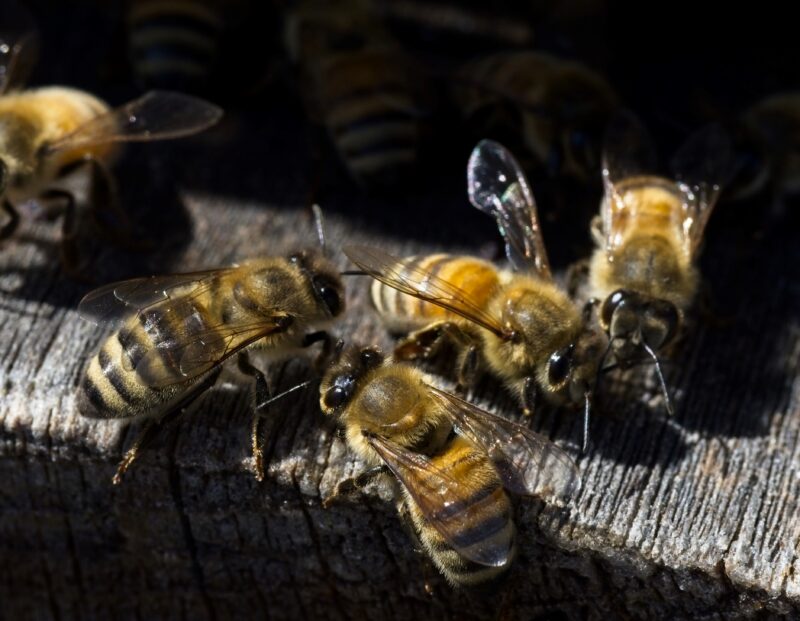
Honey bees are providing valuable insights into the biology of aging through the Buck Institute’s Bee Projects.